
Wellness
MEN’S HEALTH: Natural Options for Alzheimer’s Prevention

 Alzheimer’s disease is not a normal part of aging. With a little understanding of the condition, you can take effective natural steps to prevent its onset and preserve men’s health.
One of the greatest concerns for aging men’s health how to avoid the devastating effects of memory loss and disorientation known as Alzheimer’s disease (AD). First described in 1906 by psychiatrist Alois Alzheimer, it’s typified by a gradual loss of memory and language skills, progressing to a generalized decline of all cognitive functions. It currently affects 3-5% of those over 65 and up to 20% of those over 85. Over 4 million are now diagnosed with Alzheimer’s, and that number is expected to triple by 2050. There is no ‘cure,’ but prevention is possible.
Alzheimer’s is not a normal part of aging, and steps can be taken to reduce your chance of succumbing to its progressive decline.
There appears to be a genetic predisposition worsened by environmental factors, diet and lifestyle. Amyloid plaques slowly spread in the brain, losing the neuronal connections, while the neurotransmitter, acetylcholine, and blood flow, are reduced. Chronic inflammation accentuates the damage — impossible to reverse.
Prevention is key.
Obesity, smoking, advanced age, exposure to aluminum or mercury, high cholesterol and high homocysteine levels are the risk factors. Getting exercise, consuming dietary antioxidants and having a low body-mass index greatly reduce risk, even if you’re predisposed to Alzheimer’s.
What specifically can you do?
- Keep a low body mass through a calorie-restricted, low carbohydrate diet rich with antioxidants. Consume 5-7 flavonoid-rich fruits or vegetables a day. Caloric restriction and reduction of inflammation are vital. A 30% calorie-restricted diet has been shown to prevent Alzheimer’s by breaking down the amyloid-peptides before they become plaques.
- Exercise regularly. Those who are physically inactive have four times the risk of developing dementia. Exercise moderately daily.
- Supplement your diet with coenzyme Q10, vitamins C and E, resveratrol, lecithin, phosphatidylserine, folate (a B vitamin), and lots of omega-3 fats (dementia patients have 40% less DHA — which comes from the omega-3 fats) than healthy adults).
- Avoid exposure to aluminum and mercury, both of which are implicated in inducing Alzheimer’s. Amyloid plaques are associated with lifetime exposure to aluminum and/or mercury, which make their way into the brain. Liquid antacids are easily-absorbed aluminum hydroxide and increase risk of Alzheimer’s by 300%! Antiperspirants contain aluminum. Dental amalgams and flu shots/vaccines contain mercury (as thimerosal), as do some fish.
- Ginkgo biloba is proven to delay the onset of mental impairments. In a three-year study, reliably taking ginkgo supplements slowed degeneration, reducing memory problems in the elderly by 68%. An Italian study, published in European Journal of Neurology, concluded that ginkgo biloba works as well as any drug to treat mild to moderate forms of Alzheimer’s. Researchers at Oxford concluded that use of ginkgo is not only safe, but also has the benefit of no excessive side effects.
- Maintain mental stimulation. Learn new things constantly. Take classes, read books, go to museums.
Memory loss and cognitive decline is not an inevitable part of men’s health. You can take steps to avoid Alzheimers and live a long, productive life with great memories.



World champion surfer, bestselling author, and leadership speaker Shaun Tomson is marking the 20th anniversary of Surfer’s Code with something bigger than a book launch. He is using the milestone to spark a broader movement centered on hope, purpose, resilience, and personal responsibility.
First published in 2006, Surfer’s Code became one of surfing’s most enduring and best-loved titles, resonating with readers far beyond the beach. Now, with a new 20th anniversary edition set for release on April 28, 2026, Tomson is revisiting the message that made the book so impactful in the first place, while introducing updated reflections drawn from decades of lived experience in and out of the water.
At its core, Surfer’s Code is built around a simple but powerful idea: the promises we make to ourselves shape the lives we live. Tomson’s philosophy, often expressed through the words “I will,” has long encouraged people to live with greater intention, discipline, and courage. In a time when many people feel disconnected or uncertain, that message may feel more relevant than ever.
Rather than treating this anniversary as a conventional book tour, Tomson is framing it as a live invitation for people to come together around values that still matter. Through a series of events tied to the release, he aims to create conversations that inspire, uplift, and move people toward action in their own lives.
Tomson has spoken openly about the transformative power of words and ideas, especially during difficult times. For him, books are not just a source of comfort, they are a way to reset the mind and create a new perspective. That belief has helped define his work as an author, speaker, and mentor, and it sits at the heart of this new chapter for Surfer’s Code.
The influence of the book has also been recognized by some of the most respected voices in surfing. Kelly Slater, the 11-time world champion, has praised it as a lasting classic, noting that Tomson’s lessons reach far beyond surfing and into everyday life. That broader appeal is part of what has given Surfer’s Code its staying power over two decades.
Tomson, who won the world surfing title in 1977, has spent much of his life using the sport as a platform for something larger than competition. Over the years, his message has reached audiences in corporations, universities, underserved schools, and prisons, proving that the values forged in the ocean can carry meaning almost anywhere.
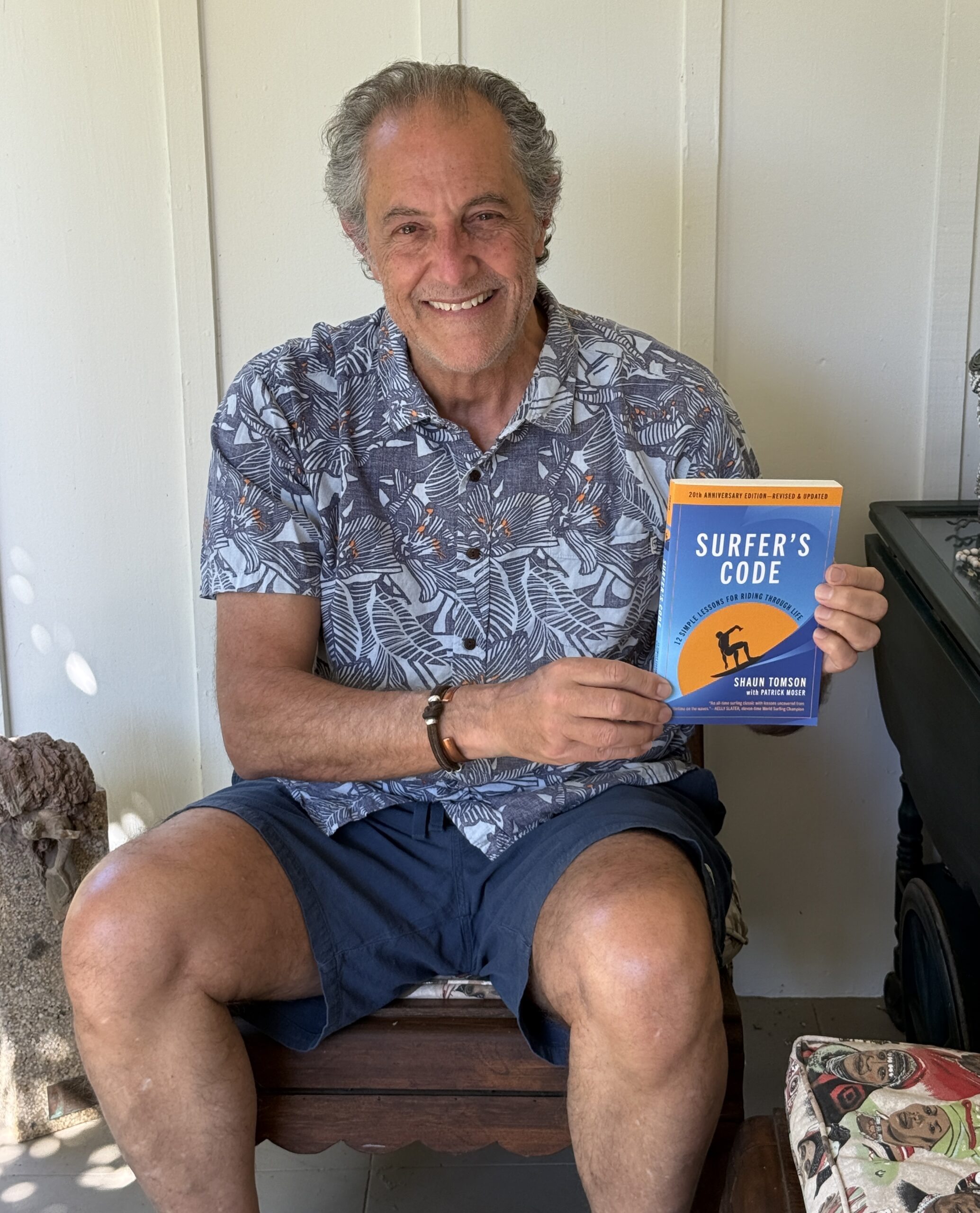
What makes this 20th anniversary edition especially timely is its focus on connection and responsibility in a world that often feels fragmented. The book’s message is not about escaping life’s difficulties. It is about meeting them with clarity, commitment, and the willingness to choose a better path.
For readers who love surfing, Surfer’s Code remains a touchstone. For everyone else, it offers something just as valuable: a practical philosophy for navigating adversity, loss, change, and the daily challenge of living with purpose.
Tomson’s message is also extending beyond the page through the relaunch of Instinct, the iconic surf brand he originally founded in 1979. The revived label is being positioned as more than a nostalgia play, reconnecting with the values-driven spirit that has long defined Tomson’s work while introducing Instinct to a new generation. In interviews around the relaunch, Tomson has framed the brand as part of the same larger mission behind Surfer’s Code, one rooted in purpose, character, and positive choices.
Finance
PR and SEO Best Practices for Law Firms, Dentists, Wellness Companies, and Chiropractic Offices

These days, your reputation often begins online before a client ever walks through your door. Whether you run a law office, a dental practice, a wellness brand, or a chiropractic clinic, people are searching the web to find answers, compare options, and decide who they can trust. That is where public relations and search engine optimization come together.
PR shapes your story and builds credibility. SEO makes sure the right people actually see it. When the two are aligned, they create a cycle of trust and visibility that fuels growth.
Why PR Matters for Professional Services
Public relations is not just about getting your name in print. It is about shaping perception. A thoughtful media mention, a quote in an article, or a published expert opinion can position you as someone worth listening to. For a lawyer, this might mean explaining a high-profile case in plain language for the public. For a dentist, it could be offering preventative care tips during National Dental Health Month. Chiropractors might focus on wellness and posture awareness, while wellness companies can shine by connecting their products to lifestyle conversations.
“PR is about storytelling,” says Mike Falkow, CEO at Meritus Media. “For industries like law and healthcare, it is often the difference between being just another listing online and being recognized as a trusted voice.”
How SEO Brings People to You
PR helps you look credible. SEO makes you visible. If you want new clients to find you when they type into Google, you need smart SEO strategies. That includes clear keywords, easy-to-navigate websites, local business listings, and reviews.
A law firm in Los Angeles that wants more personal injury clients has to show up when someone searches for “Los Angeles personal injury attorney.” A Tampa chiropractor has to be easy to find when someone types in “back pain relief near me.” It is not just about ranking higher, it is about meeting people right at the moment they need you.
Blending PR and SEO
Here is where the magic happens. When you land a feature in a credible publication, that mention often includes a link back to your website. Google sees that link as a vote of confidence, which boosts your search rankings. On the flip side, a blog post that is written with SEO in mind can get picked up and shared if it is timely and tied to bigger conversations in the media.
According to Meritus Media, “The mistake many professionals make is treating PR and SEO as separate projects. The truth is they amplify each other. Press mentions bring credibility and backlinks, and optimized content helps that coverage travel further.”
Best Practices for Each Industry
-
Law Firms: Build authority through thought leadership. Comment on relevant legal issues and create content around the cases and topics people are searching for.
-
Dentists: Focus on education. Share preventative care tips, encourage reviews, and make sure your practice shows up in local searches like “dentist near me.”
-
Wellness Companies: Lean into education-driven PR. Announce new research, highlight expert voices, and optimize for lifestyle searches such as “natural ways to boost energy.”
-
Chiropractic Offices: Become the go-to local expert. Host workshops, engage with local press, and use SEO to highlight treatments tied to specific conditions and locations.
The Takeaway
A strong digital presence requires more than just a website. It requires being seen, being trusted, and being remembered. For law firms, dentists, wellness companies, and chiropractic offices, the smartest approach is one where PR and SEO are not competing, but working together.
As Meritus Media puts it, “It is not enough to have an online presence. You need to be discoverable, credible, and memorable. That is the sweet spot where PR and SEO intersect.”

Men do not have a menopause moment. There is no dramatic, all-at-once hormonal cliff like women experience in midlife. Instead, there is a quieter, slower change, a gradual decline in testosterone that can take decades to unfold. For many men, it creeps in so subtly that it is brushed off as “just getting older.” But this stage of life has a name, and it can carry serious consequences: andropause.
Testosterone levels naturally drop about 1% a year starting in a man’s 30s or 40s. That might sound insignificant, but over time it can mean a major difference in energy, mood, strength, and overall health.
Dr. Anju Mathur, Medical Director at Angel Longevity Medical Center and a specialist in bioidentical hormone replacement therapy, says the misconception around “male menopause” keeps too many men from seeking help. “Andropause is real, but it is not the male equivalent of menopause. It is a gradual process that can span decades, which is why so many men suffer in silence. They notice they are not feeling like themselves: less energy, decreased motivation, changes in body composition, but they are told it is just part of getting older. The truth is, optimal hormone levels are crucial for men’s health and vitality at every age.”
Beyond the Bedroom
While loss of sex drive is often the headline symptom, andropause affects much more than libido. Men may experience:
- Decreased muscle mass and strength
- Increased belly fat
- Lower bone density
- Fatigue and poor sleep
- Mood changes, depression, or irritability
- Brain fog and memory issues
Some men even get hot flashes and night sweats, symptoms they never expected to share with women in menopause.
Why It Matters for Long-Term Health
Untreated low testosterone is not just uncomfortable. It is linked to higher risks of heart disease, type 2 diabetes, osteoporosis, and even premature death. A large Veterans Affairs study found that men who restored testosterone to normal levels had a lower risk of heart attack or stroke, while those left untreated faced a 56% higher mortality rate.
The Diagnostic Gray Zone
Pinpointing andropause can be tricky. Symptoms overlap with stress, depression, poor sleep, and chronic illness. Blood tests help, but testosterone levels fluctuate throughout the day and can be affected by illness, medications, and lifestyle. The best evaluations go beyond total testosterone to include free testosterone, SHBG (sex hormone-binding globulin), and other hormone markers that influence function.
Treatment: More Than a Prescription
For some men, lifestyle changes such as more exercise, better sleep, and improved nutrition can make a meaningful difference in hormone balance. When testosterone therapy is necessary, it is available as gels, injections, patches, or pellets.
Dr. Mathur stresses a whole-body approach. “I do not just prescribe testosterone and send men on their way. I look at adrenal function, thyroid health, insulin sensitivity, vitamin D levels, and lifestyle factors. Sometimes optimizing those areas can naturally improve testosterone production. When replacement is needed, I use bioidentical hormones and monitor closely to ensure we are achieving optimal levels safely.”
The Functional Medicine Edge
Addressing andropause from a functional medicine perspective means getting to the root of hormone decline and addressing overall wellness. That can mean correcting nutrient deficiencies, improving sleep, reducing inflammation, and managing stress. Zinc, vitamin D, and magnesium play a particularly important role in testosterone production.
Reclaiming Vitality
Andropause does not have to signal the beginning of decline. With proper diagnosis, targeted treatment, and smart lifestyle shifts, men can maintain strength, focus, and energy well into later life.
If you are feeling unusually tired, unfocused, or unlike yourself, do not chalk it up to age. It could be your body’s way of telling you something important. Addressing andropause is less about turning back the clock and more about making the years ahead some of your best yet.

Is Your Business Running On Software, Or Workarounds?

Museum Dining and the Cultural Experience

More Than Wine: New Reasons to Visit Napa

How a Billion-Dollar Entrepreneur Is Changing Wellness Technology

The Future Is Personalized: Why Peptides Are the Next Big Thing in Wellness

The Future of Wellness




The Shift Toward Holistic Medicine: Why Preventative Care Is Gaining Ground

The Gut-Brain Connection: How Digestive Health Influences Mood and Energy

Diabetes in America: What You Need to Know About This Growing Health Challenge

Understanding Epstein-Barr Virus: The Hidden Culprit Behind Chronic Fatigue

The Daily Cup: Finding Wellness in a Simple Cup of Tea

Personalization and Technology Are Reshaping the Future of Wellness
-
 Wellness1 year ago
How a Billion-Dollar Entrepreneur Is Changing Wellness Technology
-
 Wellness1 year ago
The Future Is Personalized: Why Peptides Are the Next Big Thing in Wellness
-
 Wellness1 year ago
The Future of Wellness
-

 Wellness1 year ago
Peptides: The Emerging Frontier in Health and Wellness
-

 Wellness1 year ago
Wellness Gets a Bold New Face: MAKE Launches with Star-Studded Kickoff Event in Florida
-

 Fashion1 year ago
Spring Fashion Trends: Fresh Looks for a New Season
-

 Beauty2 years ago
Beauty as Self Care
-

 Art & Entertainment1 year ago
Read, Watch, Repeat: A Father’s Day Tradition That Brings Stories to Life